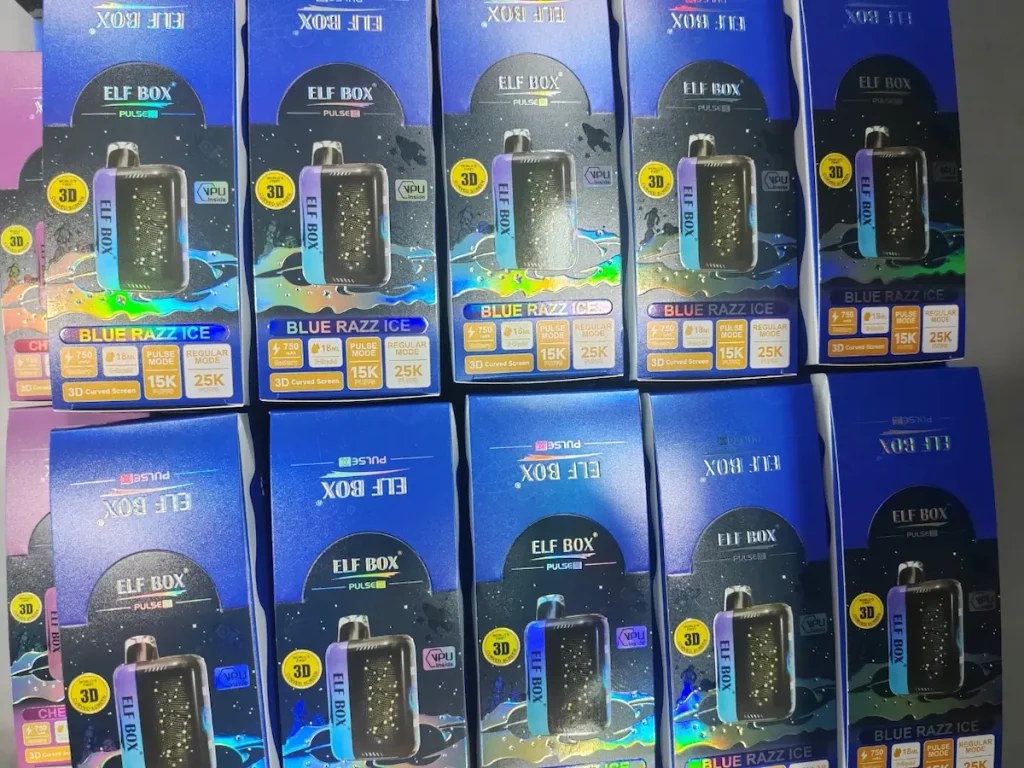
What a 20K, 100K or 500K puff rating actually means, why two devices with the same number can perform differently, and how wholesale buyers should compare them.
Quick answer: A vape puff count is a manufacturer-rated maximum, not a promise of a fixed number of draws. Real use depends on draw length, airflow, coil resistance, e-liquid capacity and how often the device is recharged. For trade buyers, puff class is useful for range planning, but it is not a like-for-like performance guarantee.
Puff numbers are now the main shorthand in the high-capacity disposable market: 20K, 60K, 100K, 180K, 300K and 500K. They help a shop build a price ladder, but they can also mislead if the buyer treats them as exact. This guide explains what the number represents and how to compare suppliers without inventing claims.
What does a puff count actually mean?
In most supplier specifications, the puff count is a calculated or tested maximum under a defined draw. The manufacturer may use a machine draw of a set length and interval, or a formula based on e-liquid volume and coil output. If the test method is not stated, the number is a class label rather than a measured result.
That does not make the number useless. It gives buyers a rough position in the range: a 500K device is designed for a longer service interval than a 20K device. But two 100K devices can deliver different real-world use if their airflow, coil and e-liquid capacity differ.
Why two devices with the same puff number can differ
| Factor | Effect on real-world use | What to check |
|---|---|---|
| Draw length | Longer draws use more e-liquid per puff | Whether the supplier states a test draw |
| Airflow | More open airflow can increase consumption | Fixed or adjustable airflow |
| Coil resistance | Lower resistance can produce more vapour per draw | Coil type and resistance |
| E-liquid capacity | More liquid supports more draws, if the coil keeps up | ml per device, not just puff class |
| Battery | A weak battery can reduce consistency before the liquid is finished | mAh and charging type |
| User behaviour | Frequent short draws and long draws differ | No fixed answer; treat as a range |
This is why a 180K device with 108 ml and a 180K device with a smaller reservoir may not feel the same. The number is the headline; the hardware is the explanation.
Labelled maximum vs retail expectation
A shop should not advertise the labelled number as a guaranteed personal result. The safer retail language is “up to” or “rated at”. That is not just cautious wording; it protects the shop from a customer who counts draws and finds a different result.
For trade buyers, the useful question is not “is the number true?” but “is the number consistent across this supplier’s range?” If a supplier uses one test method for 20K devices and another for 500K devices, the price ladder may not be comparable.
How to compare suppliers
- Ask for the puff test method, not only the headline number.
- Compare e-liquid capacity in ml.
- Compare coil type and resistance.
- Check battery capacity and charging.
- Ask whether the puff figure is calculated or measured.
- Check the carton quantity and the unit cost at the same quantity.
A supplier who can answer these questions is easier to compare than one who only sends a poster with a large number.
Puff class and price ladder
Most shops need three or four steps, not ten. A workable ladder is:
- Entry: 20K–60K for price-sensitive and first-time buyers.
- Core: 80K–180K for repeat high-puff customers.
- Hero: 300K–500K for customers who want the longest interval or the largest flavour count.
If the price gap between steps is too small, the customer trades up and the entry range loses volume. If the gap is too large, the hero device looks like a novelty. The puff number is only one input; the shelf price and the customer segment decide the ladder.
What this means for a retail listing
Use the puff class in the title, but put the supporting facts in the description: capacity, battery, coil and charging. That gives the customer a reason to choose one device over another and gives the page something more useful than a number.
For example, a 500K device with a 650 mAh battery and a multi-flavour system is a different proposition from a 500K device with a larger battery and a simpler flavour set. The number is the same; the use case is not.
FAQ
Is a 500K vape really 500,000 puffs?
It is a rated maximum, not a guaranteed count. Real use depends on draw length, airflow, coil, e-liquid and user behaviour. Treat it as a class label and compare the hardware.
Why does my 100K device finish faster than another 100K device?
The devices may have different e-liquid capacity, coil resistance or airflow. A longer draw and more open airflow can use more liquid per puff.
Should I use the puff number in the product title?
Yes, because buyers search by puff class. Use “up to” or “rated at” in the description and include capacity, battery and coil so the claim is supported.
Next step: compare the QQ Bang 500K 6-in-1 and Stag Bar 180K 6-in-1, or ask the trade desk for a puff-class comparison.
Related reading: 20K, 60K, 100K or 500K puffs: which class should you stock? and 500K puff vapes: cash, display and reorder.
Scope and sourcing: Commercial buying guide for trade buyers, not medical or legal advice. Puff figures are manufacturer-rated and vary with use; specifications are indicative and confirmed against the current batch. See our editorial policy.
Sourcing from this article?
Ask the trade desk.
Send the product or brand list and destination market — we will confirm stock, MOQ and route.
Request a quote