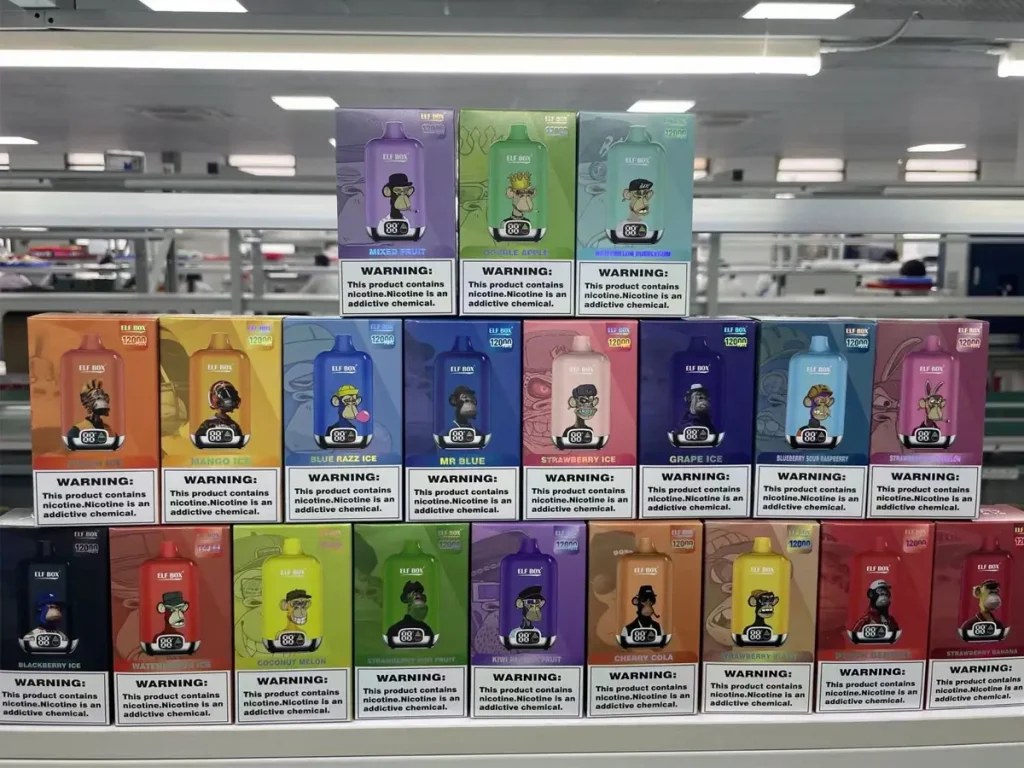
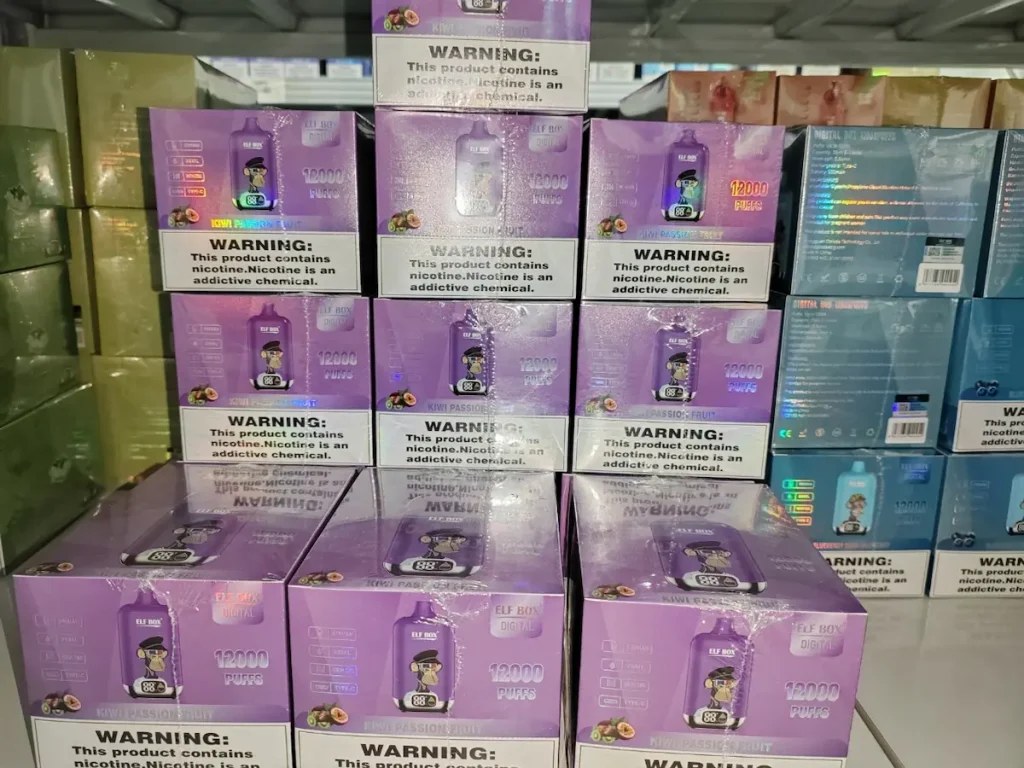
A practical merchandising guide for vape shops: three counter zones, price bands, facings, flavour grouping and the numbers to review after two weeks.
Quick answer: Most vape shops do not have a merchandising problem because they lack products. They have one because every product is presented with the same weight. A useful counter has three zones — entry, core and hero — a clear price ladder, a maximum number of facings per SKU and a display that tells the customer what to buy next. The goal is not a fuller shelf; it is a faster decision.
This guide is for independent European vape shops and small distributors planning a counter, a display case or a wall. It covers layout, price bands, facings, signage, multi-flavour devices, compliance and the numbers to review after two weeks.
1. Start with the customer path, not the planogram
A customer usually enters with one of three intentions: buy a familiar product, compare a price, or ask for a recommendation. The counter should make those three paths obvious.
A practical layout:
- Entry zone: the first thing the customer sees, with the lowest-risk price points and the fastest repeat purchases.
- Core zone: the middle of the display, where the best-selling 40K–60K devices sit at eye level.
- Hero zone: one or two premium or multi-flavour devices, displayed with a clear reason to trade up.
If every shelf is full and every device has the same number of facings, the customer has no path. The eye needs a starting point and a next step.
2. Put the best sellers at eye level
The most valuable shelf position is not the top or the bottom; it is the natural eye line. Put the core devices there. Put the entry devices at a reachable lower level, and the hero devices at the top or in a separate lit section.
A simple test: stand where the customer stands and look at the display for five seconds. Can you tell which device is the best seller, which is the cheapest and which is the upgrade? If not, the display is not doing its job.
3. Use three price bands, not a continuous wall
A continuous price ladder from €8 to €30 is hard to shop. Three bands are easier:
| Band | Customer question | Display role |
|---|---|---|
| Entry | “What is the cheapest option that works?” | Lowest price, fast repeat, clear value |
| Core | “What do most people buy?” | Best seller, eye level, strongest facings |
| Hero | “What is the upgrade?” | Premium format, multi-flavour or larger fill |
Keep the gap between bands visible. If the entry and core devices are within €1, the customer cannot see the upgrade. If the gap is too large, the hero device looks like a different category.
4. Limit facings per SKU
Facings are the number of units of the same SKU visible at the front of the shelf. More facings make a product look important, but they also take space from other products. A practical rule for a small shop:
- Best seller: 2–3 facings
- Core seller: 1–2 facings
- Test or tail SKU: 1 facing, or none if it cannot sell through
A display with 30 SKUs and one facing each is not a range; it is a catalogue. A display with 12 SKUs and clear facings is easier to shop and easier to replenish.
5. Make the flavour choice simple
Flavour is often the hardest part of the sale. Group flavours by family rather than by brand:
- Berry
- Ice / mint
- Grape
- Tropical
- Candy / dessert
- Tobacco / shisha-style
Then put the best seller in each family at the front. The customer does not need to read 36 flavour names; they need to find their family and choose within it.
6. Multi-flavour devices need their own explanation
A 4-in-1 or 6-in-1 device is a premium product, but only if the customer understands it. Put a small sign or a staff script next to the device:
“Four flavours in one device. Start with the fruit side, switch when you want a change.”
Do not put a multi-flavour device between two single-flavour bars with no explanation. The customer will compare the price and miss the feature.
7. Signage: less text, one decision
Good signage answers one question at a time:
- “Best seller”
- “Best value per puff”
- “New flavour”
- “Upgrade: 180K, 6 flavours”
Avoid signs with five claims and no hierarchy. If everything is highlighted, nothing is highlighted. Also check that the sign does not cover the batch or the nicotine warning required for the product.
8. Compliance is part of the display
In the EU, nicotine-containing e-cigarettes and refill containers are subject to the Tobacco Products Directive framework, including labelling and notification requirements, with national differences. The display should not hide the required warnings, and age-restricted sales must be enforced at the counter.
Before changing a display, check:
- The nicotine warning is visible on the product and not covered by a price tag.
- The product is in the correct market packaging.
- Age verification is applied at the point of sale.
- No health or cessation claims are made on signs.
9. Measure the display, not just the sales
A display change should be judged after two weeks. Track:
- Units per SKU before and after the change
- Average basket value
- Share of hero devices in total sales
- Dead stock in the tail
- Staff time spent answering “which one?”
If the hero device sells more but the core device collapses, the display has cannibalised the range. If the average basket rises without losing core volume, the layout is working.
10. A simple reset checklist
- Remove any SKU with no sale in 60 days.
- Choose one best seller per price band.
- Put the core best seller at eye level.
- Give the best seller 2–3 facings; give tests one.
- Group flavours by family, not by brand.
- Add one sign per zone, not one per product.
- Check warnings, labels and age verification.
- Review the numbers after two weeks.
A reset does not require a new shop fit. It requires removing the noise and making the next decision obvious.
FAQ
How many SKUs should be visible on a counter?
For a small shop, 12–20 visible disposable SKUs is usually enough. The rest can be kept behind the counter for replenishment. The display should show the range, not the entire warehouse.
Should the most expensive device be at eye level?
Not usually. Put the core best seller at eye level and the hero device in a separate premium position. The customer should see the upgrade without losing the best seller.
Does a multi-flavour device need a separate display?
It needs a clear explanation, not necessarily a separate cabinet. A small sign and a staff script are often enough to communicate the feature.
VapeEazy supplies B2B buyers across Europe. This guide is commercial merchandising information, not legal advice. Check the current EU and national rules for labelling, notification and age-restricted sales.
Sources and further reading: European Commission — Tobacco Products Regulation · VapeEazy — How many vape SKUs should a shop stock? · VapeEazy — Flavour range planning · VapeEazy — High-puff classes
Related: Wholesale catalogue · Shop by puffs · Request a quote
Sourcing from this article?
Ask the trade desk.
Send the product or brand list and destination market — we will confirm stock, MOQ and route.
Request a quote