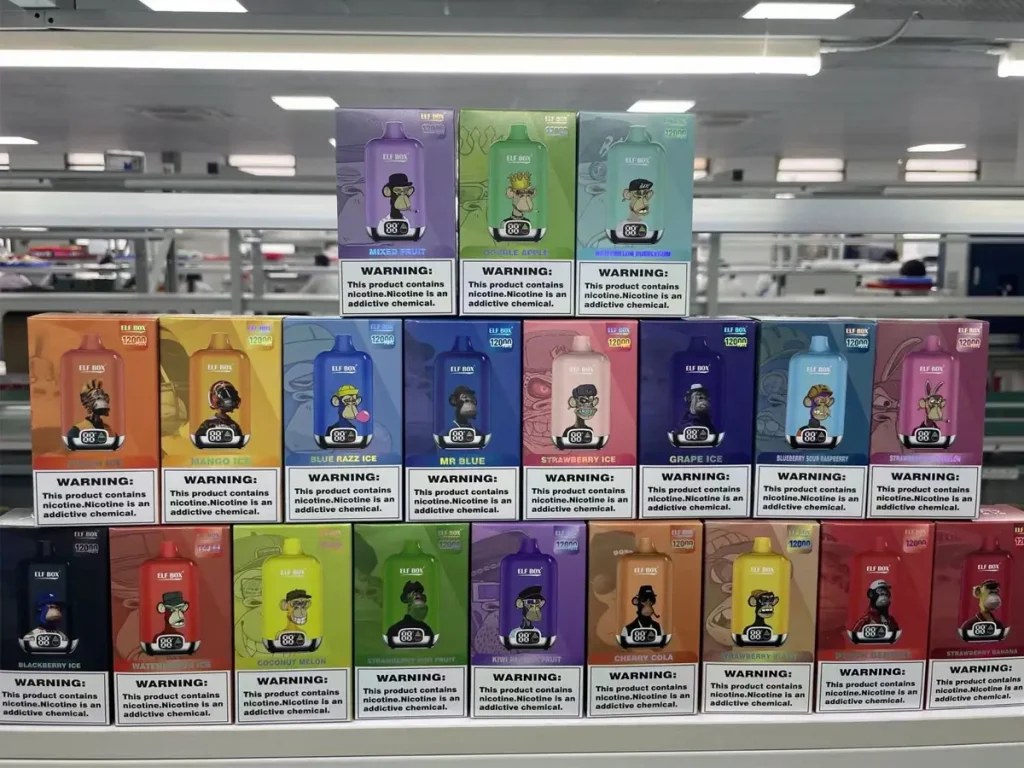
A practical 2026 replenishment model for vape shops: stock cover, reorder points, MOQ, A/B/C segmentation and a dead-stock rule that protects cash.
Quick answer: Replenishment is not “reorder when the shelf looks empty”. For a vape shop, the working model is weeks of cover plus a reorder point that accounts for supplier lead time, MOQ and the next delivery window. A simple system — weekly sales, stock cover, a fixed reorder point per SKU and a dead-stock rule — prevents most stockouts and most cash traps without a complicated ERP.
This guide is for independent shops and small distributors buying from EU stock. The numbers are examples, not a universal rule; the model should be adjusted to your sell-through, supplier lead time and cash position.
Why vape replenishment is harder than it looks
Vape ranges change quickly. A flavour that sells out in one week can be dead stock three weeks later if the brand launches a new format or a competitor undercuts the price. At the same time, a stockout on a top seller is expensive: the customer does not wait — they buy the substitute on the next shelf.
The result is a range that is simultaneously overstocked in the tail and understocked in the head. The fix is not “order less of everything”. It is to separate the fast movers, the steady movers and the tail, and give each group a different replenishment rule.
1. Start with weeks of cover, not units
Weeks of cover tells you how long the current stock will last at the current sales rate:
Weeks of cover = current stock ÷ average weekly sales
Example: 120 units on hand, average sales of 30 units per week = 4 weeks of cover. If the supplier takes two weeks to deliver, you have two weeks of buffer. If the next order window is monthly, four weeks may be too thin.
Calculate this weekly for every active SKU. A spreadsheet is enough; the value is in the rhythm, not the software.
2. Set a reorder point that includes lead time and MOQ
The reorder point is the stock level at which you place the next order:
Reorder point = (average weekly sales × lead time in weeks) + safety stock
Example: 30 units/week × 2 weeks lead time = 60 units. Add one week of safety stock (30) and the reorder point is 90 units. If the MOQ is 50, order in 50-unit steps and check the resulting cover.
For slower SKUs, the MOQ can dominate the calculation. A 10-unit MOQ with 2 units/week sales gives five weeks of cover; that may be fine. A 100-unit MOQ on a 2-unit/week SKU gives 50 weeks of cover — that is not a replenishment decision, it is a storage decision.
3. Segment the range into A, B and C
| Segment | Typical share of SKUs | Rule |
|---|---|---|
| A — fast movers | Top 20% | Two to three weeks of cover; reorder before the buffer drops below one week; never allow a stockout |
| B — steady movers | Middle 50–60% | One to two weeks of cover; reorder at the fixed reorder point; review monthly |
| C — tail | Bottom 20–30% | Sell down; do not reorder; replace with a test when stock clears |
The percentages are a starting point. The important discipline is that the A items get the cash and the attention, and the C items do not get automatic reorders just because the supplier still lists them.
4. Dead stock: define it, measure it, act
“Dead stock” is not a feeling. Define it as a SKU with no sales in the last 30 or 60 days, or with more than 12 weeks of cover at the current sales rate. Then measure the cash tied up in that list.
Three practical actions:
- Bundle: pair a slow flavour with a fast one in a display or mixed carton where allowed.
- Reduce: discount only the tail, not the whole range; protect the margin on A items.
- Stop: do not reorder C items. If a SKU has no sales in 60 days and no seasonal reason, let it leave the range.
A small shop with €4,000 in dead stock is not “fully stocked”. It is carrying a second shop’s worth of cash in the back room.
5. Match replenishment to the supplier’s rhythm
EU-stock suppliers usually have a shorter lead time than China-direct, but the order window still matters. Ask:
- Which days do you dispatch?
- What is the cut-off time?
- Which SKUs are stock lines and which are pre-order?
- What is the minimum for mixed flavours or mixed cartons?
If the supplier dispatches twice a week, you can run a leaner buffer than a supplier that ships once a month. The same sales rate needs a different stock policy.
6. A weekly 20-minute routine
- Export or write down last week’s sales by SKU.
- Calculate weeks of cover for every active SKU.
- Flag A items below two weeks and place the reorder first.
- Flag C items above 12 weeks and stop reordering.
- Check incoming purchase orders against the reorder point; avoid duplicate orders.
- Update the dead-stock list with any SKU that has had no sale in 30 days.
Twenty minutes once a week is enough for most single-door shops. The mistake is doing a big “stocktake” once a quarter and discovering the problem after the cash is already spent.
7. Replenishment and compliance
Replenishment is also a compliance decision. Before reordering a SKU, confirm that the product file, label and market notification are still valid for the batch you are buying. The EU Tobacco Products Directive sets the framework for nicotine-containing e-cigarettes and refill containers, including notification and labelling, and national requirements differ.
Do not reorder a product simply because it sold well last quarter if the documents or labels have changed. A fast-selling SKU with the wrong label is a future return, not a future sale.
8. A simple worked example
A shop sells 40 units/week of a 60K device, 12 units/week of a 20K device and 2 units/week of a premium 300K device. The supplier lead time is 10 days and the MOQ is 10.
- 60K: reorder point = 40 × 1.5 weeks + 40 safety = 100 units. Order 100–120 units.
- 20K: reorder point = 12 × 1.5 + 12 = 30 units. Order 30–40 units.
- 300K: reorder point = 2 × 1.5 + 2 = 5 units. The 10-unit MOQ gives five weeks of cover; order only when the stock is genuinely low.
The same supplier lead time produces very different order quantities because the sales rate is different. That is the point: replenishment is SKU-specific, not a single “order more” decision.
FAQ
How many weeks of cover should a vape shop hold?
Two to four weeks is a common starting range for fast movers, depending on lead time and cash. Slow movers can hold more weeks of cover without needing a reorder.
Should I reorder a slow SKU to get a better price?
Only if the extra units will sell within a reasonable period. A volume discount that creates 12 months of stock is not a discount; it is a cash-flow problem.
How often should I review dead stock?
Monthly is enough for most shops. Flag anything with no sales in 30–60 days, then decide whether to bundle, discount or stop.
VapeEazy supplies B2B buyers across Europe. This guide is a commercial planning framework, not legal or financial advice. Check the current EU and national rules for your market before reordering a product.
Sources and further reading: European Commission — Tobacco Products Regulation · VapeEazy — How many vape SKUs should a shop stock? · VapeEazy — How to read a wholesale price list · SnagVape — Rechargeable wholesale pricing guide
Related: Wholesale catalogue · Request a quote · Quality and packaging
Sourcing from this article?
Ask the trade desk.
Send the product or brand list and destination market — we will confirm stock, MOQ and route.
Request a quote