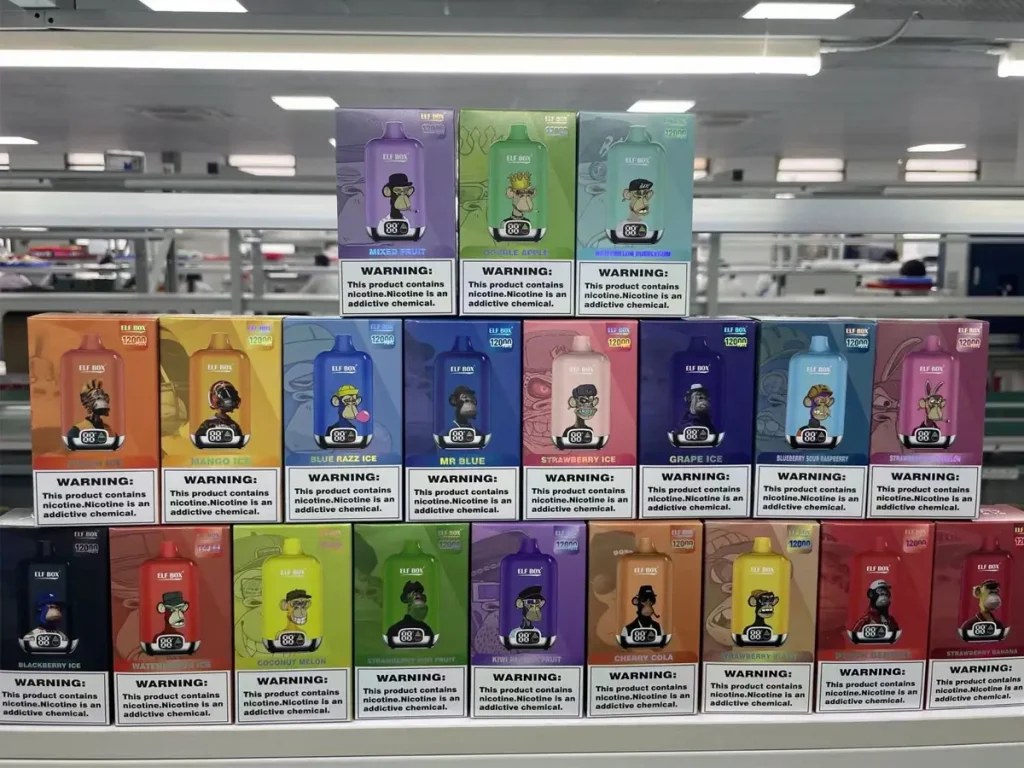
A practical 30-day opening order plan for a new vape shop: shelf capacity, a 12–18 SKU starting range, carton maths and the first reorder triggers.
Quick answer: A new vape shop does not need a full catalogue on day one. A workable opening order is usually 12–18 SKUs: roughly 60% proven high-puff lines, 25% mid-range options and 15% test SKUs. Buy enough depth for the first two weeks, keep the rest of the budget for reorders, and review sell-through after 14 days.
This guide is for independent retailers and small distributors planning a first or second store. It covers shelf capacity, the opening range, carton maths, a 30-day calendar and the numbers that should trigger a reorder. It does not assume a particular brand or market.
1. Start with shelf capacity, not the supplier catalogue
Before choosing products, count the spaces you can actually merchandise:
- How many facings does the counter or wall hold?
- How many SKUs can sit at eye level?
- How much backroom stock can you store without blocking the aisle?
- What is the opening budget for stock, and what is left for the second order?
A common mistake is to fill every facing on day one. That leaves no room for a best seller to grow and no cash for a reorder when a line proves itself. A better rule is to plan for 70–80% shelf occupancy at opening and keep the remaining space for the first replenishment.
2. Build a 12–18 SKU opening range
A simple three-tier structure works for most small shops:
| Tier | Share of SKUs | Role |
|---|---|---|
| Proven high-puff | 55–65% | Pay the rent; familiar formats and repeat purchases |
| Mid-range | 20–30% | Price ladder and alternatives when a hero line is out of stock |
| Test | 10–15% | New flavour, new format or a brand the local buyer has asked for |
Do not open with five versions of the same device. A range needs different price points, different puff classes and at least one clear alternative for each core customer. If the shop is near a convenience store or forecourt, keep the range tighter and repeat the fastest lines; if it is a destination vape shop, allow a little more depth in flavour and format.
3. Do the carton maths before you commit
Opening orders are usually quoted per carton, not per unit. Work out three numbers for every candidate SKU:
- Units per carton. How many sellable units arrive in one carton?
- Sellable cost per unit. Carton price divided by sellable units, not by the number of outer boxes.
- Weeks of cover. Units on hand divided by expected weekly sales.
If a carton gives 12–16 weeks of cover for a new SKU, it is probably too deep for a first order. If it gives less than two weeks, the line may run out before you learn whether it sells. A first carton that covers roughly four to six weeks is easier to test and easier to repeat.
4. Use a 30-day opening calendar
Days 1–3: receive and check. Count cartons, check outer packaging, inspect a sample device from each SKU and photograph any damage before storage. Keep the delivery note with the batch.
Days 4–7: merchandise and brief the team. Put the core lines at eye level, keep the test SKUs together and make sure staff know the price ladder and the flavour story for each line.
Days 8–14: watch the first repeat. Record which SKUs sell in singles, which sell in pairs and which are only bought after a recommendation. Do not reorder on one strong weekend.
Days 15–21: first reorder. Reorder the lines that have sold through at least 40–50% of their opening stock, or that have clear repeat demand. Hold the rest.
Days 22–30: cut or expand. Cut a test SKU if it has no repeat after three weeks. Expand a core SKU if it is consistently out of stock at the shelf.
5. Reorder triggers that keep cash moving
Use simple triggers rather than a feeling:
- Reorder point: when shelf stock plus backroom stock falls below two weeks of average sales.
- Repeat rate: the same customer or product family appears again within 14 days.
- Out-of-stock: a core line is empty for more than two selling days.
- Dead stock: a test SKU has fewer than three units sold in 21 days.
If a line is out of stock but has no repeat demand, do not automatically replace it with the same SKU. Ask whether the gap is a stock problem or a product problem.
6. Opening-order mistakes to avoid
- Spending the whole budget on one brand because the carton price looks lower.
- Ordering 500K devices before the shop has a customer base for that price point.
- Using the same image and description for every product on the shelf.
- Forgetting display space, bags, test units and staff training in the budget.
- Reordering before the first 14 days of sell-through data are in.
7. A simple opening-order checklist
- Count shelf facings and backroom capacity.
- Set a stock budget and keep 25–30% for the second order.
- Choose 12–18 SKUs across three price tiers.
- Check carton size, sellable unit cost and weeks of cover.
- Plan the first 30 days and write down reorder triggers.
- Photograph deliveries and keep batch notes.
FAQ
How many SKUs should a new vape shop open with?
Start with 12–18 SKUs across entry, core and test tiers. That is enough to cover the main price points without tying up the whole opening budget in one range.
How much of the opening budget should be held back?
Keep roughly 25–30% for the first reorder. The first two weeks of sell-through are more useful than a larger opening order based on guesswork.
When should a new shop place its first reorder?
Review after 14 days and reorder lines that have sold through about 40–50% of opening stock or show clear repeat demand. Do not reorder on one strong weekend.
Next step: send the trade desk your shelf count, opening budget and target customer. We can put together an opening range with carton sizes, MOQ and estimated weeks of cover. Request an opening-order quote or browse the current catalogue.
Related reading: How many SKUs should a European shop stock? and Vape shop replenishment guide.
Sourcing from this article?
Ask the trade desk.
Send the product or brand list and destination market — we will confirm stock, MOQ and route.
Request a quote